Showing posts with label FMLA. Show all posts

Tuesday, August 6, 2013

Tip Tuesday! 5 big mistakes that will get you sued under the ADA

By
Christian Schappel


This year, it’s expected that nearly 30,000 ADA-related claims will be filed against employers with the EEOC. A big part of the reason: Some employers have gotten their wires crossed when it comes to complying with some of the more confusing aspects of the law.
In 2012 alone the EEOC says, 26,379 disability claims were filed, and the agency collected a whopping $103.4 million in damages resulting from those claims.

To help employers keep themselves from becoming part of those bleak statistics, employment law attorney Jeffrey S. Kopp from the firm Foley & Lardner, LLP, recently pointed out five of the worst mistakes employers make that expose them to EEOC discrimination claims and employee lawsuits:

Click here to continue reading.


Wednesday, July 3, 2013

DOMA struck down: Impact on FMLA, COBRA, ERISA policies


US Supreme Court DOMAby Christian Schappel
As you’ve probably heard by now, the U.S. Supreme Court just struck down the Defense of Marriage Act (DOMA). This will have some far-reaching effects on benefits plans.
In addition, the High Court also ruled on a case involving California’s Proposition 8, the state’s same-sex marriage ban. It said that supporters of the ban didn’t have legal standing to appeal a lower court’s ruling that struck down the ban.
This will more than likely open the door to legalized same-sex marriage in California, although the losing party has a few weeks to petition the courts over the verdict.
Click Here to continue reading.

Thursday, June 27, 2013

Benefits recordkeeping: What you must keep – and for how long


by Christian Schappel
Recordkeeping paperworkThe trouble with recordkeeping at a lot of companies: You don’t know how complete your records are until you get involved in litigation or an audit. But by then, it’s often too late to fill in any critical gaps.
That’s why it’s essential to know — before you’re charged with any wrongdoing — what documents you need to hold onto and what you can trash without putting your company at risk.
Click Here to continue reading.

Thursday, April 11, 2013

Spring Cleaning Your HR Records


Whether it looks like it outside or not, spring officially arrived on March 20. While we normally associate this change in season to spring cleaning our homes, it is also a good time to spring clean the company’s records.

How long should your company keep certain records?

    cleaning
  • ERISA 107 requires anyone who files certain information (e.g., Form 5500) should keep records (COBRA, as well) for six years from the filing date, which means the records need to be kept for eight years.
  • Internal Revenue Code states that employers who maintain a fringe benefit plan should retain records for four years from the tax filing date, for a total of five years.
  • Tax records should be kept for three years from the tax filing date, four years in total.
  • FMLA paperwork should be kept for three years.
  • HIPAA records should be kept for six years.
  • Medicare Part D and RDS records should be kept for six years.
Click Here to continue reading.

Thursday, April 4, 2013

Top 10 questions asked by HR professionals

The Employers Resource Association receives more than 8,000 calls each year to its human resources hotline. For the third consecutive year, ERA data show, the highest demand for phone-in expertise was not about health care reform or retirement plans, but HR “staples” like performance management, fair labor issues and immigration. On ERA’s top 10 list of most-questioned topics, the Family and Medical Leave Act remains No. 1.

Click Here to continue reading.

Wednesday, April 3, 2013

FMLA notice errors any HR pro can make

By Dan Wisniewski 

A new ruling is a good reminder that the process of granting FMLA leave is fraught wit
h opportunities to make mistakes.
Here are the details of the case, laid out by Kevin Donovan from Wilson Elser:

Three key FMLA notice documents

Jacqueline Young requested FMLA leave from her employer, The Wackenhut Corporation.
Now, when staff members request FMLA leave, employers are required to supply three things:
  1. Eligibility notice. Employers must provide an eligibility notice to employees within five days of determining that leave be for a qualifying reason.
  2. Rights and responsibilities notice. When employers supply the eligibility notice, they also must provide this notice, which details the obligations and expectation of the employee while on leave and what happens if those expectations aren’t met.
  3. Designation notice. If an employer determines the employee can take FMLA leave for the reason suggested, firms must alert the employee the leave is approved and that it will be counted as FMLA leave.  
Click Here to Continue Reading.

Wednesday, March 27, 2013

How healthcare reform is changing HR analytics

By Guest Author 

HR has been and will continue to wear a lot of hats when it comes to healthcare reform. One tool HR pros may be overlooking, according to systems developer Marco L. Padovani: analytics.

Starting in 2014, healthcare reform requires employers with over 200 full-time employees to enroll all of their staffers (new and existing) in a healthcare plan.
Additionally, employers with over 50 full-time equivalent employees will be subjected to an assessable payment if they don’t provide minimum essential coverage — or if that coverage is not affordable.

Click Here to continue reading.


Thursday, February 21, 2013

Take FMLA Health Conditions Seriously


A serious health condition is the most common reason for taking FMLA leave, whether it is for the employee or a spouse, son, daughter or parent with a serious health condition.
How does one determine a serious health condition (SHC) for FMLA purposes?
The textbook answer is that an SHC is an illness, injury, impairment or physical or mental condition that involves either inpatient care or continuing treatment by a health care provider.
Inpatient care is easy to determine. It means any overnight stay in a hospital, hospice or residential medical care facility, including any period of incapacity or any subsequent treatment in connection with inpatient care.
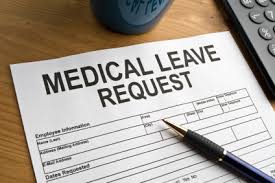
What about continuing treatment? That is where the difficulty lies. Continuing treatment includes the following:
·      Incapacity and treatment. The incapacity must exceed three consecutive, full calendar days. The treatment typically must consist either of two doctor visits within 30 days of the start of the incapacity or one doctor visit followed by a regimen of continuing treatment (e.g., physical therapy, taking a prescription). The first visit must occur within the first seven days of incapacity. Examples include pneumonia and minor outpatient surgery.
·      Pregnancy or prenatal care. Expectant moms with any length of incapacity qualify.

Click here to continue reading.

Friday, February 15, 2013

DOL Announces Final FMLA Regulations


On the twentieth anniversary of FMLA’s enactment, the DOL issued finalregulations that clarify amendments made in the past few years.

The regulations focus on two areas of FMLA:  military leave (created by the National Defense Authorization Act for Fiscal Year 2010) and special rules for airline and flight crew employees (created by the Airline Flight Crew Technical Corrections Act). The regulations take effect 30 days after they are published in the Federal Register.

Here is a summary of changes for military qualifying exigency leaves:
·      Employees are now eligible if they have family members serving in the regular armed forces
·      Eligible family members may take leave for purposes of rest and recuperation for up to 15 days, instead of just five days
·      There is a new qualifying exigency leave category for parental care

Click here to continue reading.

Friday, January 4, 2013

Intermittent FMLA leave: 4 steps to stay on the right side of the law

By Dan Wisniewski
Saying that intermittent FMLA leave is a tricky area for HR pros is an understatement.
For instance, what do you do when a doctor certifies that a staff member will need intermittent FMLA leave but doesn’t specify the duration or frequency of the worker’s illness?
Or what if you suspect FMLA abuse? Can you ask the employee to get recertified – and if so, how soon after the he she got the initial certification?
Here are four steps to make sure you stay on the right side of the law when approving, denying and overseeing intermittent leave, courtesy of Mark Toth on The ManpowerGroup Employment Blawg. 

Click here to view the steps.

Wednesday, May 16, 2012

Aflac Pays for FMLA Violation

Given its experience with time-off issues, Aflac is not the type of employer you would guess to settle with the DOL for a violation of FMLA.
That’s exactly what happened in April, to the tune of almost $17,000.
The DOL Wage and Hour Division (WHD) settlement was based on Aflac’s termination of an employee who took intermittent leave because of a serious health condition. Aflac contended that the leave was not FMLA-protected because the employee did not provide requested documents on a timely basis. The WHD investigation showed otherwise.
Click Here to continue Reading.

Wednesday, April 25, 2012

Heads up: The IRS could be poking around your COBRA procedures


Got all your COBRA procedures in line? Because it looks like the IRS could be stepping up its audit program.
The IRS recently released revised audit guidelines for its COBRA investigators. The new rules cover reg changes in such laws as HIPAA and FMLA. 
Russell Chapman, Lisa Taggart and Andrea Jackson, writing on employeebenefitscounsel.com, outline some of what the new rules cover: 

Tuesday, May 24, 2011

Why the New ADA’s an Even Bigger Pain Than You Thought | HR Morning

The new ADA substantially expanded the pool of employees who might be classified as disabled. But there’s more: It will also affect how you handle FMLA leave and potential GINA violations.

As you know, the new Americans with Disabilities Act (ADAAA) recently expanded the definition of “disability,” meaning more people than ever qualify as disabled.

But that expansion has also affected other employment laws, including the Family and Medical Leave Act (FMLA) and the Genetic Non-Discrimination Act (GINA).

Here’s a look at just how the new ADA will affect your dealings with the FMLA and GINA, courtesy of Robin E. Shea of Employment and Labor Law Insider.

Link to Whole Article Here from HR Morning